
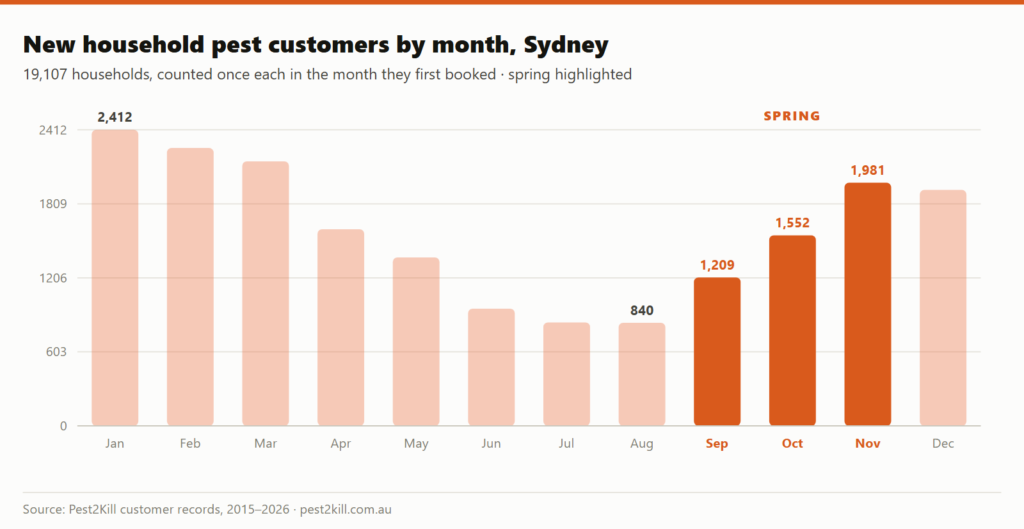
Analysis of a decade of Sydney pest records — 99,599 treatments across 22,751 properties — finds household pest activity more than doubles across spring, months before the summer call-outs most people associate with pests. Spider enquiries rise more than five-fold. One pest ignores the season entirely — rodents turn up in all 52 weeks of the year.
SYDNEY, 6 August 2026 — Sydney households waiting for summer to think about pests are already months behind, according to new analysis released today by Sydney pest control company Pest2Kill.
Drawing on a decade of job records and two years of customer enquiries, the analysis found household pest activity more than doubles between August and November — the steepest sustained climb anywhere on the calendar, and one that is well established before the first hot weekend of summer.
Key Findings
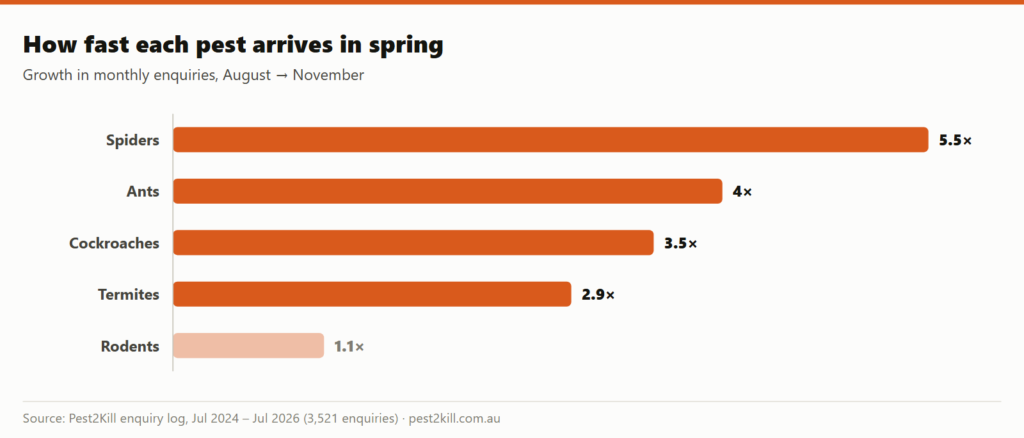
- Spiders accelerate hardest of any pest. Spider enquiries rise 5.5 times between August and November — the sharpest spring surge measured, and the clearest early signal that the season has turned.
- Spring runs close to double the winter rate. New household bookings rise 136 per cent between August and November — the steepest sustained climb anywhere on the calendar. It is not one year’s quirk: November outran August in ten of the eleven years measured.
- Cockroaches are Sydney’s dominant pest. 49 per cent of customer enquiries name cockroaches, more than every other pest combined — a figure that appears independently in both datasets.
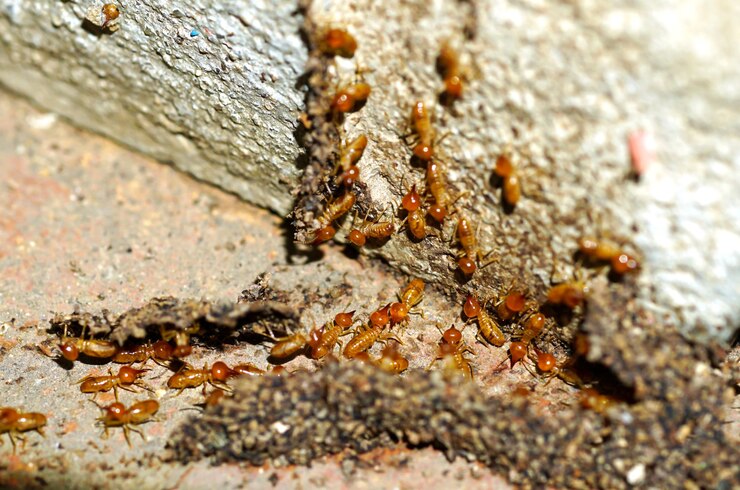
- Termites wake with the warmth. Thirty per cent of the year’s termite enquiries arrive in September to November as swarming season begins — the highest spring concentration of any pest.
- One pest never takes a season off. There is not a single week of the calendar year — all 52 of them — without a rodent job or enquiry somewhere in the company’s Sydney records. Rodents barely respond to spring at all, rising just 1.1 times from August to November: the only household pest with no seasonal pattern.
“These figures match what our technicians see in the field. Pest pressure builds right through spring, weeks before most households notice anything — and it builds across several species at once, which is why the spider, cockroach and ant numbers all climb together. These findings reinforce why we recommend preventative general pest control in early spring rather than waiting until January, when pest populations are already well established. One treatment applied before populations establish covers those species together and holds through the summer peak.”
— Phil Taylor, CEO, Pest2Kill
Where You Live Changes Which Pest You Get
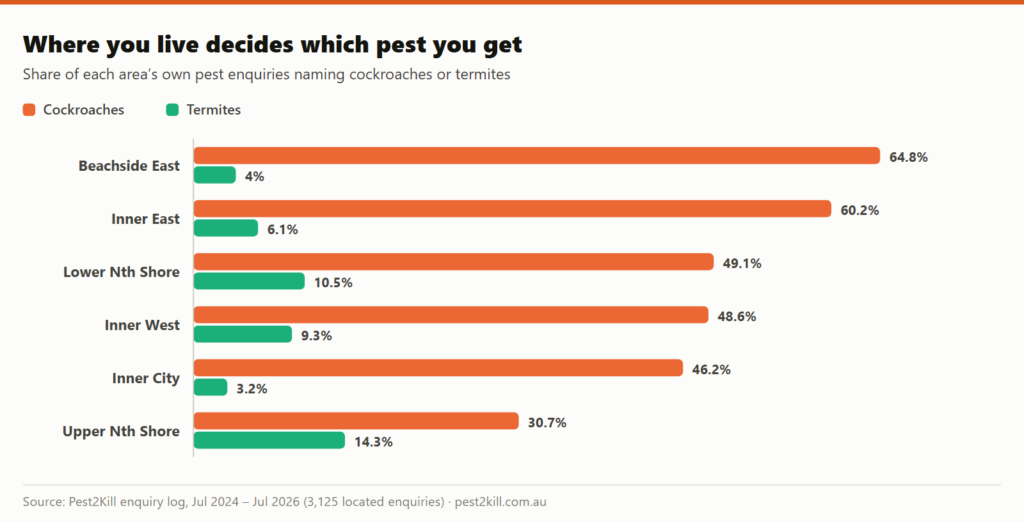
The analysis also compared what each area’s enquiries were actually about, rather than how many there were — a measure unaffected by where the company has most customers.
Across Sydney’s beachside eastern suburbs, 65 per cent of enquiries concern cockroaches, against a 50 per cent average for the company’s service area as a whole. On the upper north shore the figure falls to 31 per cent — less than half the rate — while termites climb the other way, from 4 per cent of beachside enquiries to 14 per cent. The map effectively inverts between the two.
“Building type and microclimate drive this far more than location does. High-density coastal housing holds warmth and moisture, and that suits cockroaches. Established timber homes on landscaped blocks present a completely different risk profile — subterranean termites and web-building spiders. We are treating the same city, but the structure in front of us dictates the approach.”
— Phil Taylor, CEO, Pest2Kill
Rodents were the one exception, appearing at a near-identical rate — between 9.7 and 12.1 per cent of enquiries — in every area measured, from the inner city to the Upper North Shore. They are the only pest in the analysis with neither a season nor a postcode.
What Sydney Households Can Do This Spring
1. Book a preventative general pest control treatment. A single treatment in early spring covers cockroaches, spiders and ants together, before populations establish — and holds through the summer peak.
2. Clear the perimeter. Move firewood, garden bags and stored timber away from external walls — the single most common conducive condition for both termites and spiders.
3. Correct moisture faults early. Leaking taps, blocked weep holes and poor subfloor ventilation sustain the cockroach populations that peak from November.
4. Book a termite inspection. Swarming season begins in spring, and inspection remains the only reliable way to detect activity before structural damage occurs.
5. Don’t stand down over winter. Rodent activity runs at a steady rate all year, with no week of the calendar free of it — the one pest that never takes a season off.
Download the Full Pest Report & Get Your Spring Pest Checklist
Want to dive deeper into the data? Download the full Sydney Spring Pest Trends Report and get your copy of the spring checklist to keep your home pest-free this spring.

